A blog about Wirral Council's public meetings, Wirral Council's councillors, Bidston & St. James ward and other public bodies on Merseyside
Author: John Brace
New media journalist from Birkenhead, England who writes about Wirral Council.
Published and promoted by John Brace, 134 Boundary Road, Bidston, CH43 7PH. Printed by UK Webhosting Ltd t/a Tsohost, 113-114 Buckingham Avenue, Slough, Berkshire, England, SL1 4PF.
Which St Helens councillor claimed £12 for a salmon dinner and a drink of Coke?
Which St Helens councillor claimed £12 for a salmon dinner and a drink of Coke?
Cllr Linda Maloney (Vice Chair of the Merseyside Fire and Rescue Authority) on the left of the photo speaking at a public meeting on the 30th June 2015
Pictured on the left of the photo above is Councillor Linda Maloney who is a Labour councillor from St Helens. She is also Vice-Chair of the Merseyside Fire and Rescue Authority.
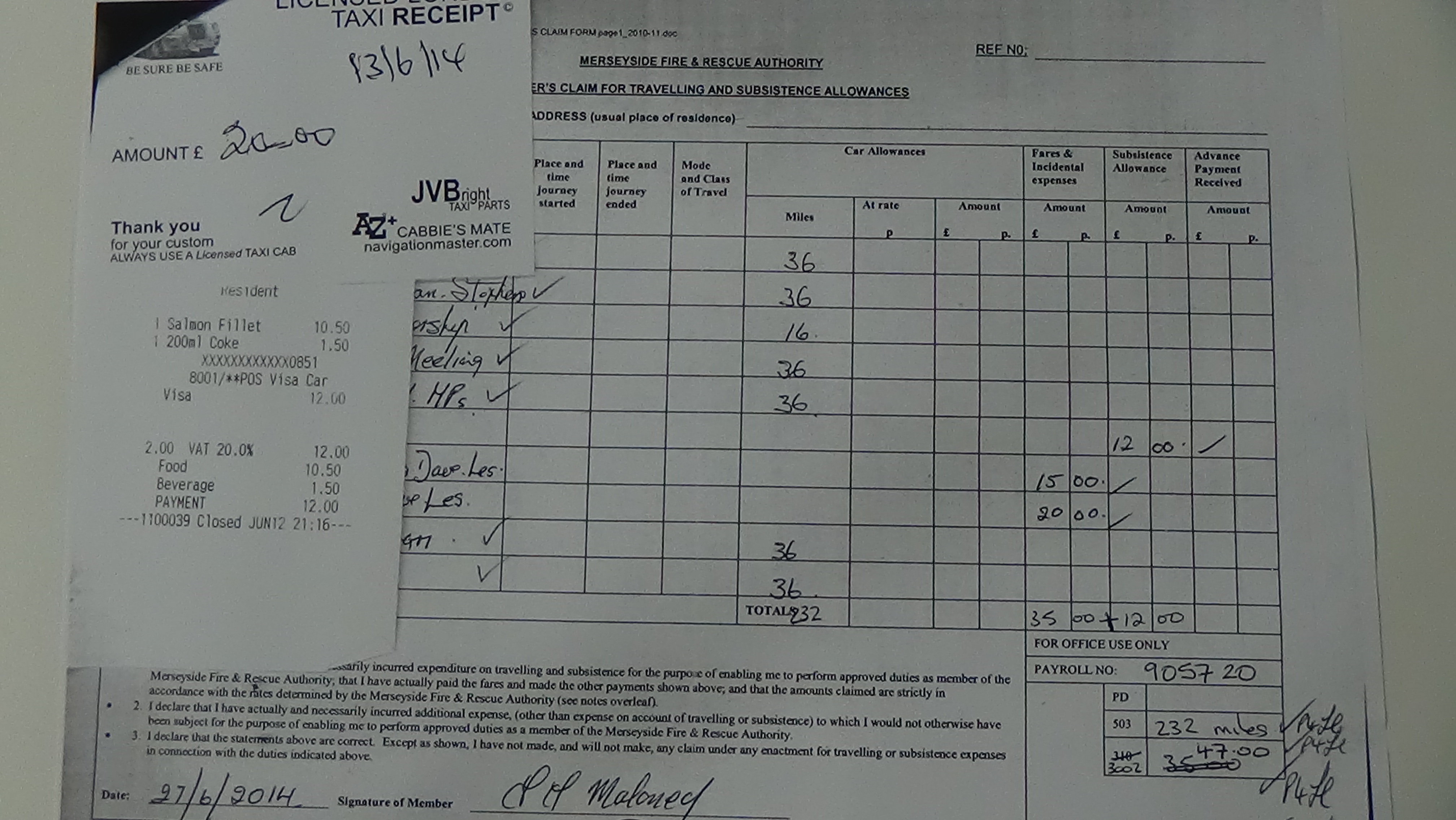
Despite receiving £27,800 from the taxpayer for her public duties as a councillor (although presumably she wouldn’t receive all of this as some would go on Income Tax and National Insurance), she still claimed from the taxpayer for a salmon dinner and a drink of Coke at a total cost of £12 at a time when there are many people in Merseyside reliant on handouts from food banks!
Councillor Linda Maloney expense claim page 1 of 3Councillor Linda Maloney expense claim page 2 of 3Councillor Linda Maloney expense claim page 3 of 3
Sadly we were only allowed to inspect photocopies of the expense claims and receipts. As you can see from the receipts above, like Cllr Steve Niblock she also claims for journeys by taxi. Unfortunately the receipts obscure the reasons given on her expenses form for this expenditure.
If you click on any of these buttons below, you’ll be doing me a favour by sharing this article with other people. Thanks:
Which Wirral councillor claimed £50 on taxis to and from a public meeting?
Which Wirral councillor claimed £50 on taxis to and from a public meeting?
I wrote recently to some of the councillors on Merseyside Fire and Rescue Authority expressing my concern that there were two expenses systems.
The first involved amounts where councillors had paid out expenses and claimed the money back. The totals for each councillor are published annually and you can see the list for 2014/15 on Merseyside Fire and Rescue Service’s website. This list also includes the extra £8,070 a year that each councillor on Merseyside Fire and Rescue Authority receives with some receiving more on top of this (such as the Chair receives an extra £16,140 on top of the £8,040). These amounts are in addition to what they each receive for being a councillor from their own councils.
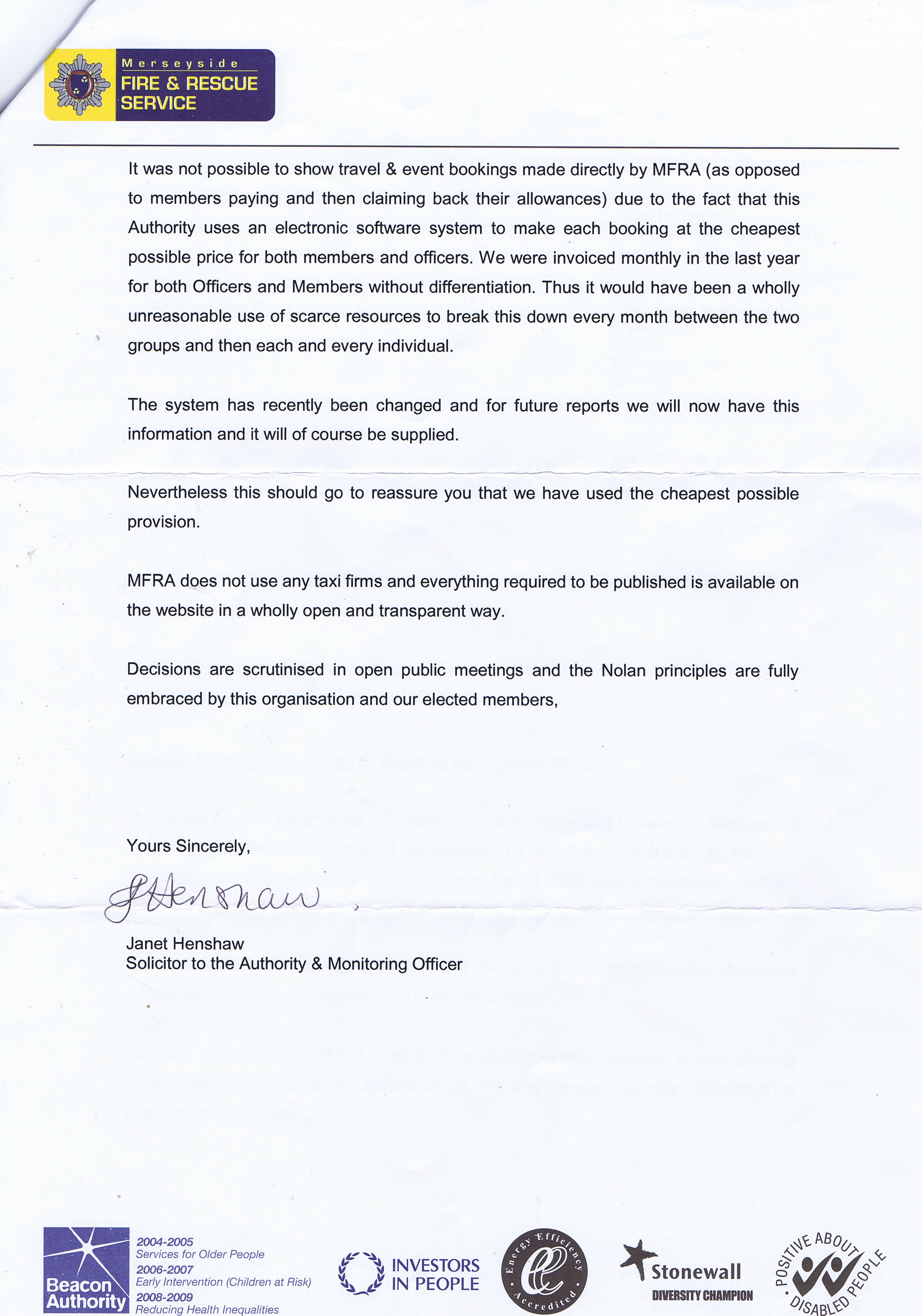
However there is a “secret” expenses system for councillors where Merseyside Fire and Rescue Service is invoiced directly. These amounts are not in the list above. My letter expressed the view that such expenses should be included and the reply I received is below.
Merseyside Fire and Rescue service letter about councillor expenses page 1 of 2Merseyside Fire and Rescue service letter about councillor expenses page 2 of 2
So I recently went to Merseyside Fire and Rescue Service’s headquarters in Bridle Road, Bootle and inspected these records. Below are two pages of an invoice for taxi rides by councillors that because Merseyside Fire and Rescue Service are invoiced directly don’t get included in the annual published lists.
Cabfind Ltd invoice taxis for councillors page 1 of 2Cabfind Ltd invoice taxis for councillors page 2 of 2
I was astounded to find that a councillor from Wirral (Cllr Steve Niblock who is one of the three Labour councillors from Wirral on the Merseyside Fire and Rescue Authority) had taken a taxi from his home to the Fire and Rescue Service headquarters for a public meeting that cost £25 and then a taxi back costing a further £25 (total £50)!
The letter from Janet Henshaw stated “It was not possible to show travel & event bookings made directly by MFRA [Merseyside Fire and Rescue Authority] (as opposed to members paying and then claiming back their allowances) due to the fact that this Authority uses an electronic software system to make each booking at the cheapest possible price for both members and officers.” and “MFRA [Merseyside Fire and Rescue Authority] does not use any taxi firms“.
Cabfind Limited isn’t a taxi firm, but based on this statement you’d expect that taxi journeys made by councillors using Cabfind Limited would be the same or cheaper than paying for it themselves?
Below is an expense claim submitted by Cllr Steve Niblock for a journey when he has paid the taxi fare himself and claimed it back. The journey to the Merseyside Fire and Rescue Service headquarters is from and to the same address as the Cabfind Limited invoice above.
Councillor Steve Niblock expenses claim taxi journeys
The taxi journeys above were for £18.60 and £20.00. This is for exactly the same journey that when booked through Cabfind Limited (which Merseyside Fire and Rescue Service claim is “at the cheapest possible price”) was £25.00 and £25.00.
Had Councillor Steve Niblock walked to the nearest train station (Bebington) and got the train to the nearest train station to Merseyside Fire and Rescue headquarters (Aintree) the fare would’ve been only £3.85 each way (total £7.70). However there is nothing in the Merseyside Fire and Rescue Authority expense rules that states that councillors claiming back travel expenses have to travel by the cheapest route possible (such as by public transport).
Councillor Steve Niblock recently voted to close Upton and West Kirby fire stations and is part of the ruling Labour Group on Merseyside Fire and Rescue Authority that claims that the Conservative government doesn’t give the Merseyside Fire and Rescue Authority enough money.
However that minor quibble aside, what does this decision mean? Firstly the current traffic regulation order consultation process is “discontinued”. This means the Highways and Traffic Representation Panel will now not meet in September to make a recommendation on it.
The decision also states “that the approved proposal to introduce car parking charges at Fort Perch Rock, New Brighton not be implemented”.
Interestingly the decision also states in the reasons for the decision (paragraph 2.5 refers to the report that accompanies the decision) “As described at paragraph 2.5 above, factors which were not known by Cabinet at the time of the approval of the budget proposal have become known during the Traffic Regulation Order consultation process.”
“2.3 As part of the 2015/16 Budget Proposal, Cabinet and Council also agreed to review car parking charges across the Borough to help support business needs.
2.4 In order to implement the parking charge at Fort Perch Rock, the Council has been undertaking consultation as part of the required Traffic Regulation Order (TRO) process. Whilst it is not considered that there are any objections or other representations received which would prevent the TRO proposal being implemented, there are objections relating to traffic regulation which would require consideration of the outcomes of the consultation regarding the TRO by the Highways and Transportation Representations Panel.
2.5 However, it has recently come to light that the legal agreement which was signed between the Council and Neptune Development as part of the Marine Point Development included a clause which stated that should the Council introduce on street car parking charges in New Brighton and/or charges for the Fort Perch Rock Car Park, then the other car parks which formed part of the Marine Point Development could also not unreasonably be prevented from introducing car parking charges.
2.6 The wider introduction of car parking charges to New Brighton could potentially have an impact on visitors and businesses in the area. Given the outcome and budget decision regarding reducing car parking charges throughout Wirral in order to support businesses, this could potentially have a conflicting impact.
2.7 It is therefore proposed that the work to undertake a TRO be halted and that the proposal to introduce car parking charges at Fort Perch Rock, New Brighton, not be implemented.”
The legal agreement referred to above means the lease. Maybe it’s only recently come to light to the author of the report, but I published the three pages of the lease on December 22nd 2014 so it’s hardly recently come to light has it? However as Wirral Council is the landlord for this lease isn’t this a prime example of “the left hand doesn’t know what the right hand is doing” or to put it another way silo working.
So how are the books now going to balance? Well the report states that for this year “income for off-street parking is forecast to be greater than budgeted.” and “The overall budget saving of £35,000 will be included in the planned budget for 2016/17, from further efficiencies which will be identified during the current year.”
The decision to not charge at the Fort Perch Rock car park will take effect from the 8th August 2015 (assuming that the decision isn’t called in which is highly unlikely).
The FOI request this relates to was made through the excellent whatdotheyknow.com website on the 29th March 2013. It’s for minutes of the meetings of 26 different panels, statutory committees, advisory committees and working parties that councillors are appointed to by Wirral Council.
In September 2014, the Information Commissioner’s Office issued 9 page decision notice FS50509081. In a nutshell that decision notice stated that by the 13th October 2014 Wirral Council had to:
b) advise whether it held the minutes of these meetings or not.
Wirral Council did not respond to the decision notice by the 13th October 2014. Instead it took a further three weeks than was allowed and Wirral Council responded on the 4th November 2014. Minutes of seven meetings were supplied (some minutes were supplied with some information blacked out). In response to other parts of the request it provided links to its website.
This left nine disputed parts of the request which were in relation to the bodies below (I’ll use the original numbering). JCC stands for Joint Consultative Committee and Members means councillors. I provide under each one what it’s remit was:
4 (School Appeals Panel)
To consider, as part of a statutory review process, appeals against decisions by the Local Authority (or the Governors of voluntary or aided schools) concerning the allocation of places in primary and secondary schools, and decisions by governing bodies concerning the exclusion of pupils.
The School Appeals Panel is drawn from a “pool” of lay members or members with experience in education. However, Councillors are ineligible to serve on Appeals Panels for schools under local authority control.
5 (Standing Advisory Committee on Religious Education (SACRE))
SACRE is responsible for advising the local authority on matters concerning the teaching of religious education and collective acts of worship; it decides on applications for determination of cases in which requirements for Christian collective worship are not to apply; and may require the local authority to review its agreed syllabus.
8 (Adoption / Fostering Panels)
As part of a wider membership, to determine applications for the adoption and for the fostering of children.
10 (Unified Waiting List Management Advisory Board)
To consider appeals from applicants who consider they have been unfairly treated or unfairly excluded from the waiting list, having exhausted the Steering Group appeals procedure.
11 (Discharge from Guardianship by Wirral Council under the Mental Health Act 1983 Panel)
To hear requests to discharge service users subject to guardianship upon the application of a professional responsible for their care.
15 (Headteachers and Teachers JCC)
To meet with headteachers’ and teachers’ representatives to discuss educational issues.
18 (Members’ Training Steering Group)
To advise on the preparation of the annual programme of training for Council members and on individual applications to attend courses.
19 (Members’ Equipment Steering Group)
To review IT equipment provision for members.
26 (Safeguarding Reference Group)
Established by Cabinet on 15 April 2010 for the purpose of ensuring that the most senior community leaders of the Council are enabled to carry out their responsibilities of safeguarding children and adults in Wirral.
Minutes of a Unified Waiting List Management Advisory Board meeting (part 10 of the request) Wirral Council merely stated “Officers are investigating if this Board has ever met/if there are any minutes available and we will answer this part of your enquiry as soon as possible.”
So I requested an internal review of the application of these exemptions on the 12th November 2014. On the 30th April 2015 Wirral Council responded to the internal review request. I’ll point out here that internal reviews are supposed to be completed within 40 days, but Wirral Council took 5 months.
Wirral Council also pointed out that since the Council’s housing stock was transferred out of Wirral Council’s control in 2009, that the Unified Waiting List Management Advisory Board (part 10 of the request) hadn’t met.
In relation to part 21 (Hilbre Island Nature Reserve Management Committee) Wirral Council stated “There are no minutes from 2013 the Hilbre Island Nature Reserve Management Committee as the present Committee was formed in March 2014.”
However Wirral Council still regarded the rest of the internal review request to be vexatious.
This decision notice found in relation to part 4 (School Appeals Panel) and part 11 (Discharge from Guardianship by Wirral Council under the Mental Health Act 1983 Panel) that Wirral Council does not hold information related to this part of the request.
This finding on the school appeals panels I find odd since the school appeals panel meets at Wallasey Town Hall. In response to a previous FOI request Wirral Council stated that it pays the taxi expenses for school appeals panel members and Wirral Council employees from the Legal & Member Services section of Wirral Council take the minutes of these meetings. Apparently Wirral Council states that there were School Appeal Panel meetings in 2012 but as they only keep the decision notices for 2 years that now it’s 2015 that Wirral Council don’t have them any more.
ICO also found that Wirral Council didn’t hold meetings of the Hilbre Island Nature Reserve Management Committee and believed Wirral Council when it stated “There are no minutes from 2013 the Hilbre Island Nature Reserve Management Committee as the present Committee was formed in March 2014.”
This is disputed by both Cllr Chris Carubia and Cllr Pat Williams as you can see by their response to a tweet below:
However, ICO stated that Wirral Council breached section 10 (time for compliance with request) of the Freedom of Information Act 2000 with regards to part 5 (Standing Advisory Committee on Religious Education (SACRE)) of the request and part 10 (Unified Waiting List Management Advisory Board) because “it did not disclose information or provide a response in relation to these parts within 20 working days”.
ICO also stated in its decision notice that Wirral Council had incorrectly applied section 14(1) (vexatious or repeated requests) to parts 15 (Headteachers and Teachers JCC), 18 (Members’ Training Steering Group), 19 (Members’ Equipment Steering Group) and 26 (Safeguarding Reference Group) of the request, because “these elements of the request are not vexatious”.
ICO did decide that Wirral Council had correctly applied section 14(1) to part 8 (Adoption/Fostering Panels) of the request because it deemed it to be vexatious (but is clarified in the decision notice as being a “disproportionate burden”). Wirral Council supplied the minutes of one adoption panel meeting and one fostering panel meeting to the Information Commissioners Office which came to a total of 95 pages. Wirral Council estimated it would take 23.5 hours of staff time (just over 15 minutes a page) to make the necessary redactions.
However the minutes of the Headteachers and Teachers JCC meeting, Members’ Training Steering Group meeting, Members’ Equipment Steering Group meeting and Safeguarding Reference Group came to less than 15 double-sided pages (30 sides of A4).
The decision notice also states “The complainant will not receive a response to some parts of his request until more than two years after he submitted it.”
Either Wirral Council or myself could appeal this ICO decision notice to the First-Tier Tribunal (Information Rights) within the next 28 days.
Here are some quotes from the decision notice (committee in the first quote refers to Hilbre Island Nature Reserve Management Committee).
“The Council, however, confirmed to the Commissioner on 20 July 2015 that, having undertaken a thorough search, it does not hold any Committee minutes from 2013 or earlier.
ICO believed Wirral Council so I suppose these published minutes of the Hilbre Island Nature Reserve Management Committee published on Wirral Council’s website from the 13th April 2007, 23rd November 2006, 13th July 2005 and even as far back as 6th April 2001 are just figments of my imagination. Perhaps I’m not “on message” enough!
Here’s another quote:
“The Council’s information manager had calculated that it took 70 hours and £1,750 to provide its response to the complainant dated 4 November. It argued that the amount of time the information management team had to spend on locating, retrieving and reading information falling within the scope of the request had a detrimental impact on the team.”
On the 4th November 2014 Wirral Council provided 22 A4 pages of information. The rest it either said it didn’t hold, was already on its website or that an exemption applied. That’s £79.54 per a page (or over 3 hours per an A4 page) of released information! How can it have had a “detrimental impact on the team” when Wirral Council took the 35 days the decision notice allowed plus an extra 22 days!
and another
“The Council says this work would cause a disproportionate burden because the request does not appear to have an inherent purpose or value.”
So knowing what and how councillors make important decisions on the public’s behalf doesn’t have an “inherent purpose or value”?
If you click on any of the buttons below, you’ll be doing me a favour by sharing this article with other people.
What was in the “strictly confidential” report on Merseyside Recycling and Waste Authority that cost over £14000?
What was in the “strictly confidential” report on Merseyside Recycling and Waste Authority that cost over £14,000?
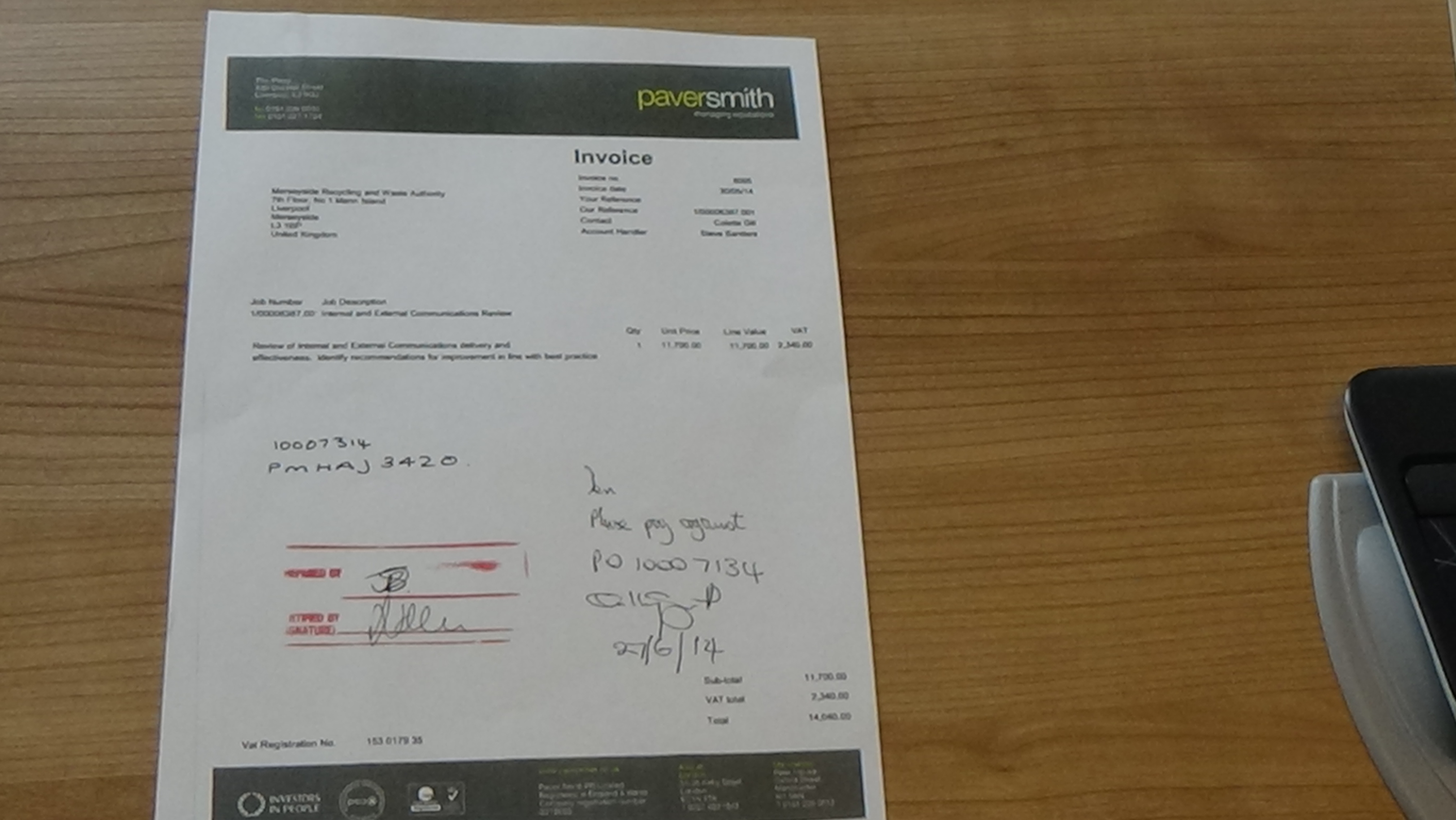
Last year Merseyside Waste and Recycling Authority paid Paver Smith (a PR agency which has since changed its name to Influential) £11,700 + VAT for 18 days work (at a rate of £650 + VAT) for an internal and external communications review. You can see the invoice for that work below.
Merseyside Recycling and Waste Authority invoice Paver Smith
The internal communication review involved ‘discovery’ sessions with MRWA staff, an online questionnaire and focus groups. Below is the internal communications bit of the report (with my comments under each page).
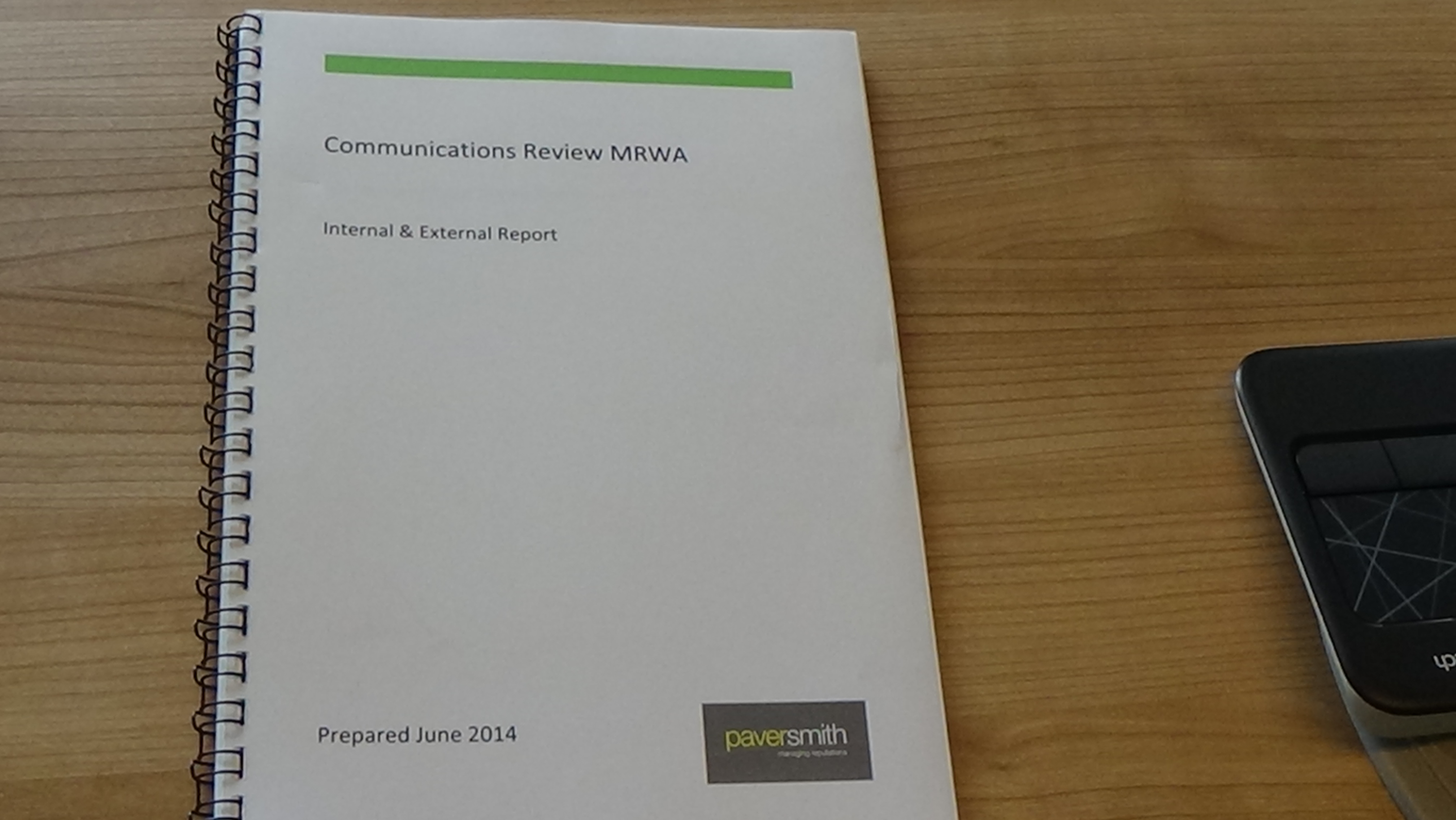
Paver Smith report on internal communications to Merseyside Recycling and Waste Authority page 1
This is just the cover page for the report.
Paver Smith report on internal communications to Merseyside Recycling and Waste Authority page 2
This report is “strictly confidential”. Why do I know this? Why I know because this page tells me so in red letters.
Paver Smith report on internal communications to Merseyside Recycling and Waste Authority page 3
This is a contents page.
Paver Smith report on internal communications to Merseyside Recycling and Waste Authority page 4
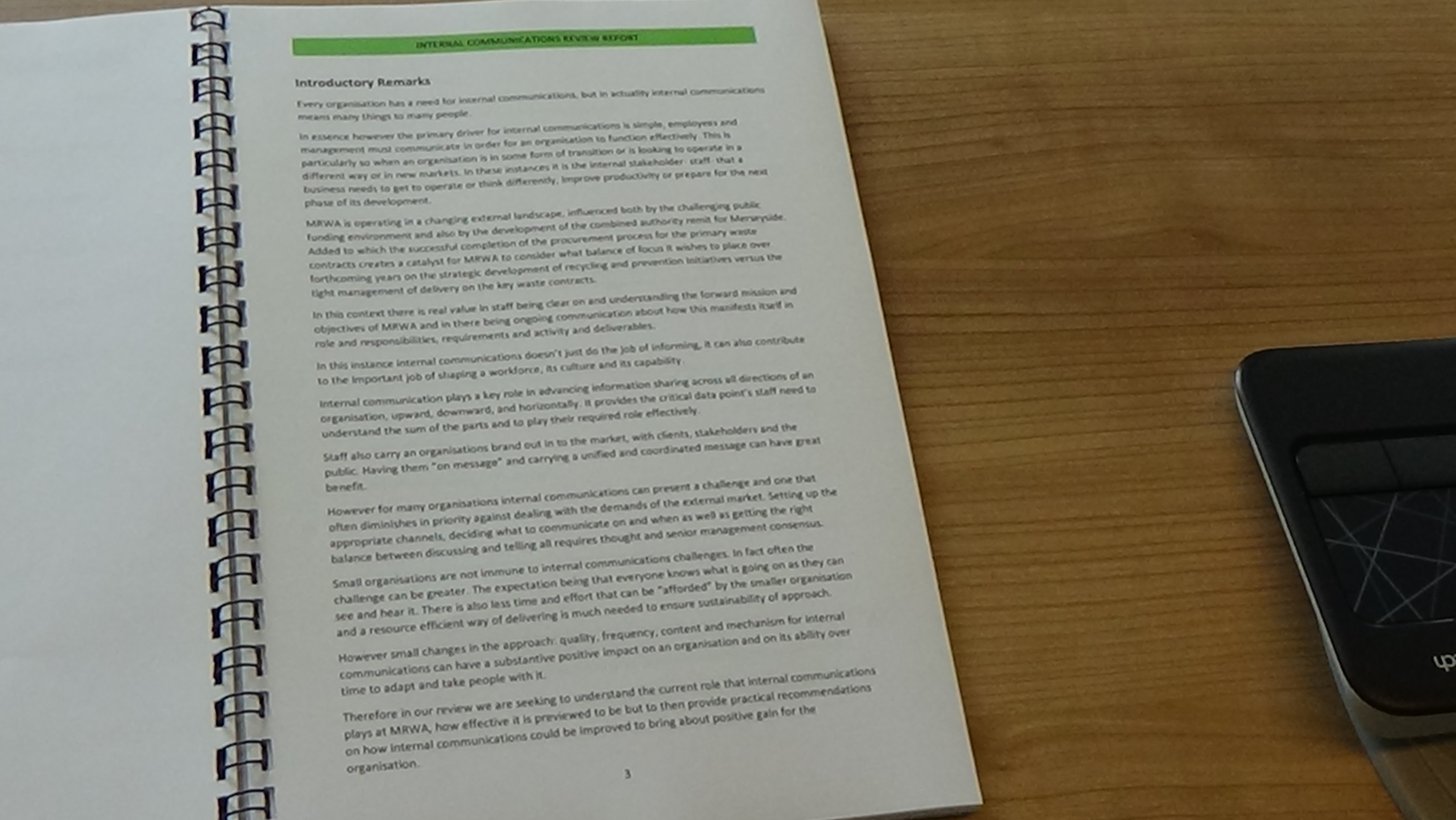
A whole page on “introductory remarks” that contains a lot of phrases such as:
“employees and management must communicate in order for an organisation to function effectively”, “there is real value in staff being clear on and understanding the forward mission and objectives of MWRA” and “Staff also carry an organisation’s brand out to the market, with clients, stakeholders and the public. Having them “on message” and carrying a unified and coordinated message can have great benefits”.
Paver Smith report on internal communications to Merseyside Recycling and Waste Authority page 5
This page deals with “Objectives and methodology” including this section on confidentiality:
It is crucial to the process on an internal communications review that all feedback is supplied in strictest confidence and handled with great care.
For the results to be helpful for an organisation feedback needs to be given openly and without concern.
Therefore all focus group interviews were undertaken in the strictest confidence under Chatham House rules with no attributing of specific statements to individuals.
The internal survey was structured also in a way to preserve anonymity.
Paver Smith report on internal communications to Merseyside Recycling and Waste Authority page 6
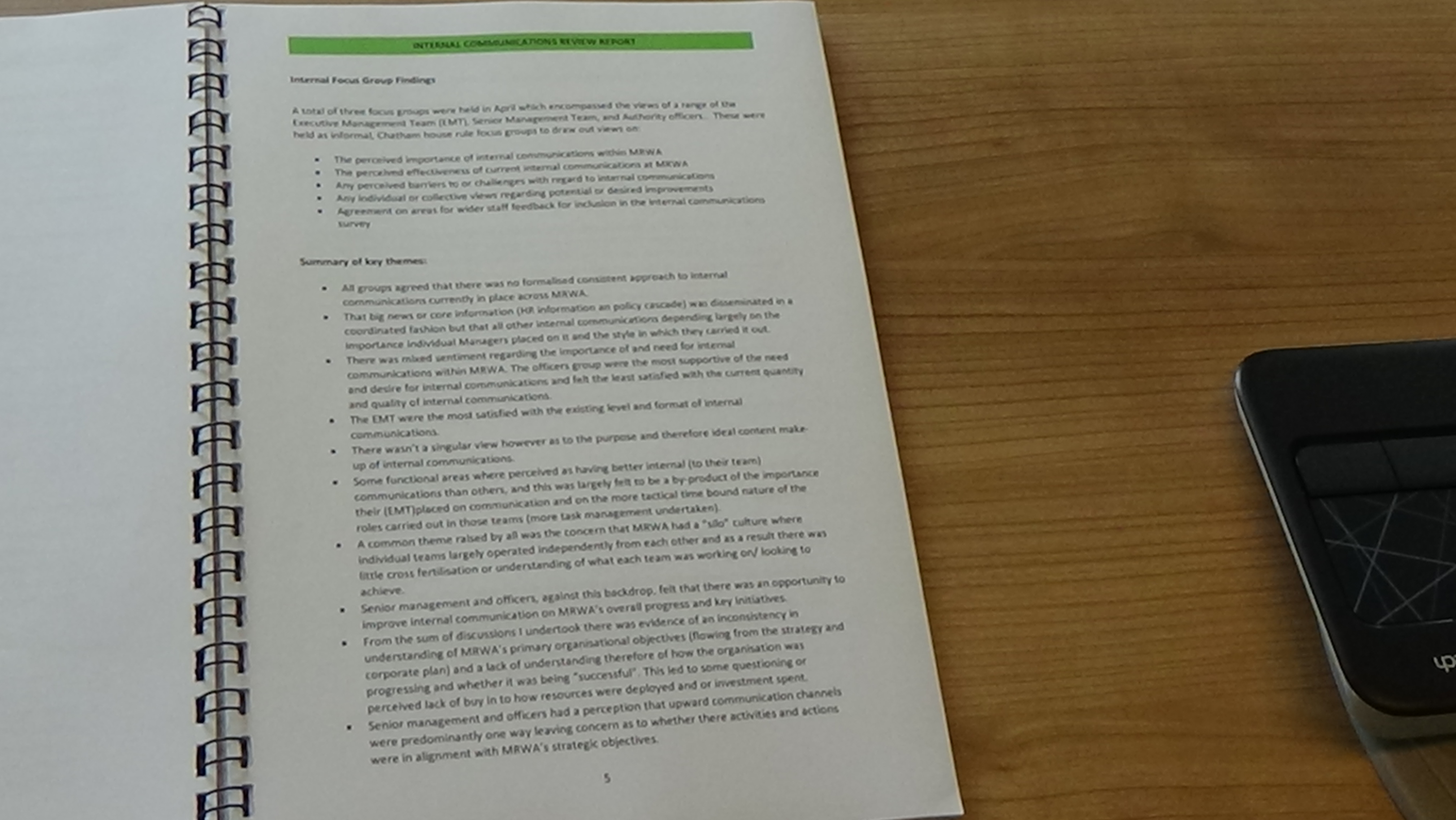
This next page goes into detail about the three focus groups (Executive Management Team, Senior Management Team and Authority officers).
One of the more interesting comments on this page is “A common theme raised by all was the concern that MRWA had a “silo” culture where individual teams largely operated independently from each other and as a result there was little cross fertilisation or understanding what each team was working on/ looking to achieve.”
Paver Smith report on internal communications to Merseyside Recycling and Waste Authority page 7
This page has the rather telling comment at the top (EMT stands for Executive Management Team) “There was a staff perception that the EMT didn’t wish to engage in two way communication and discussion.” followed by “All expressed a concern that the intranet was used passively to disseminate information that staff were then assumed to seek out, but that active use of the intranet was however very low.”
Then it moves on to themes from the Executive Management Team focus group. Here are some quotes from that focus group:
“Concern was express that some of the staff had unrealistic expectations as to what they should be communicated to about.”
and
“The intranet was raised as a tool that wasn’t effective and not proactively used to access information.”
The senior management focus group also commented on the intranet and the silo culture.
“It was felt by some that too much reliance was placed on people proactively seeking out information on the intranet and that generally people didn’t do this. “
“A major concern for this group was what was described as a “silo” culture in MRWA with individual teams and functions working in isolation from each other and not enough interaction nor understanding of each other’s objectives, activity, challenges and successes. “
Paver Smith report on internal communications to Merseyside Recycling and Waste Authority page 8
The staff focus group found internal communications was “poor”, apart from HR related matters. This focus group also felt “that generally the quality of management communication was poor and that there was a lack of interest (from the organisation) in seeking and listening to staff’s views and ideas.”.
Also commented on by the staff focus group was that this had led to a “‘what’s the point’ culture with some staff and a sense of negativity and scepticism”. The staff group expressed a “strong desire that the outcomes from the internal communications review should be shared”.
Paver Smith report on internal communications to Merseyside Recycling and Waste Authority page 9
This page deals with the results of the questionnaire, there’s a pretty even split between people who think internal communications are poor and those that think it is satisfactory.
Paver Smith report on internal communications to Merseyside Recycling and Waste Authority page 10
This is another page going into the results of the survey and has the line “Good internal communications are seen generally by staff as of crucial importance to their sense of satisfaction and general wellbeing an an employee.”
Paver Smith report on internal communications to Merseyside Recycling and Waste Authority page 11
This page details the results to the question “How important do you think internal communication is?”.
Paver Smith report on internal communications to Merseyside Recycling and Waste Authority page 12
This page is about the frequency of internal communications and information that people should receive monthly.
Paver Smith report on internal communications to Merseyside Recycling and Waste Authority page 13
This page is about the frequency of internal communications and information that people should receive quarterly or bi-annually.
Paver Smith report on internal communications to Merseyside Recycling and Waste Authority page 14
This page is about the quality of internal communication.
Paver Smith report on internal communications to Merseyside Recycling and Waste Authority page 15
This page is about satisfaction with the quality of internal communication and how it happens.
Paver Smith report on internal communications to Merseyside Recycling and Waste Authority page 16
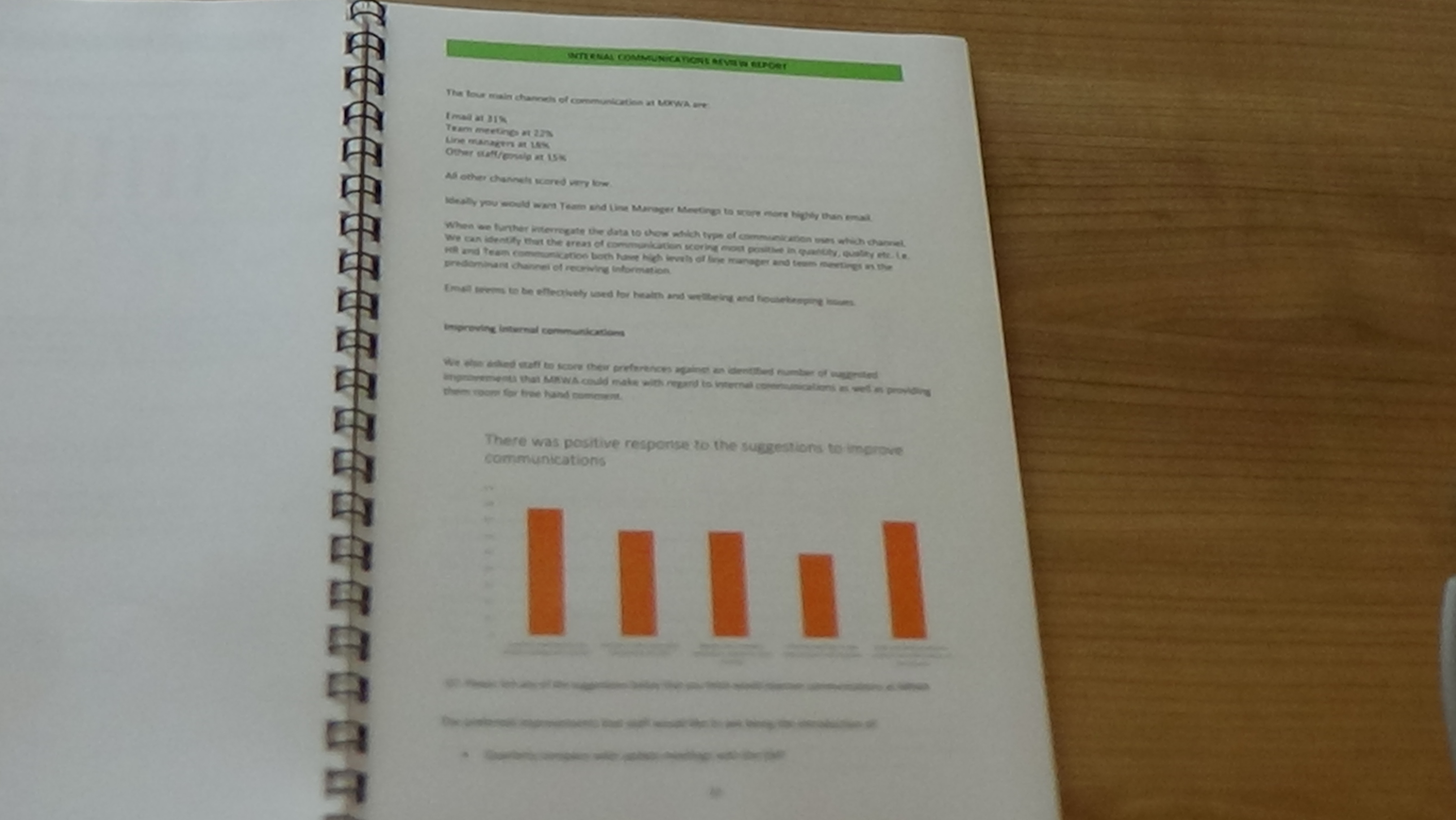
This page deals with improving internal communications.
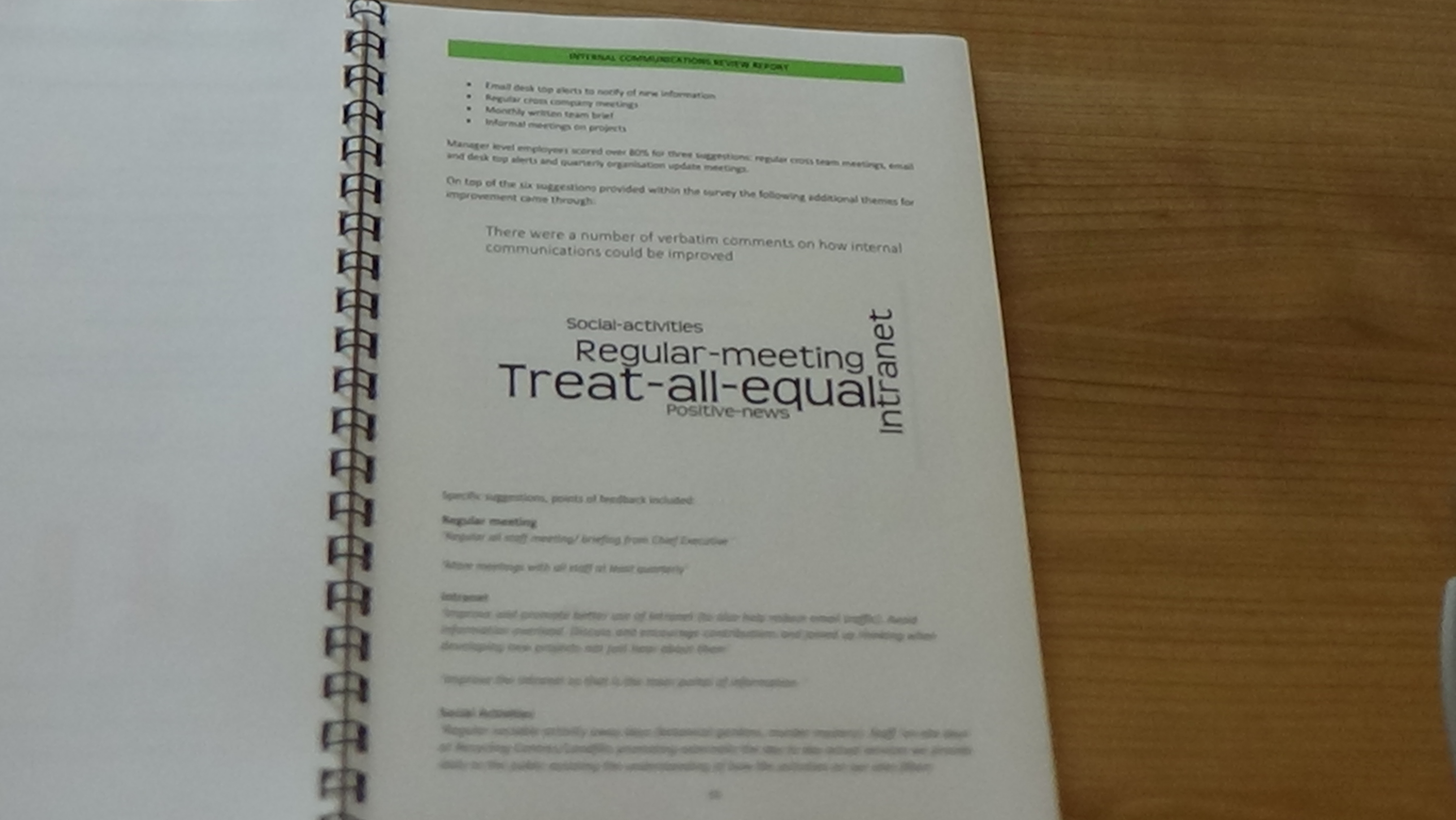
Paver Smith report on internal communications to Merseyside Recycling and Waste Authority page 17
This page deals with verbatim comments on how to improve internal communications.
Paver Smith report on internal communications to Merseyside Recycling and Waste Authority page 18
This page states expands on the heading “treat all equal” which is clarified as meaning “Reduce the secret meetings and promote total inclusion”.
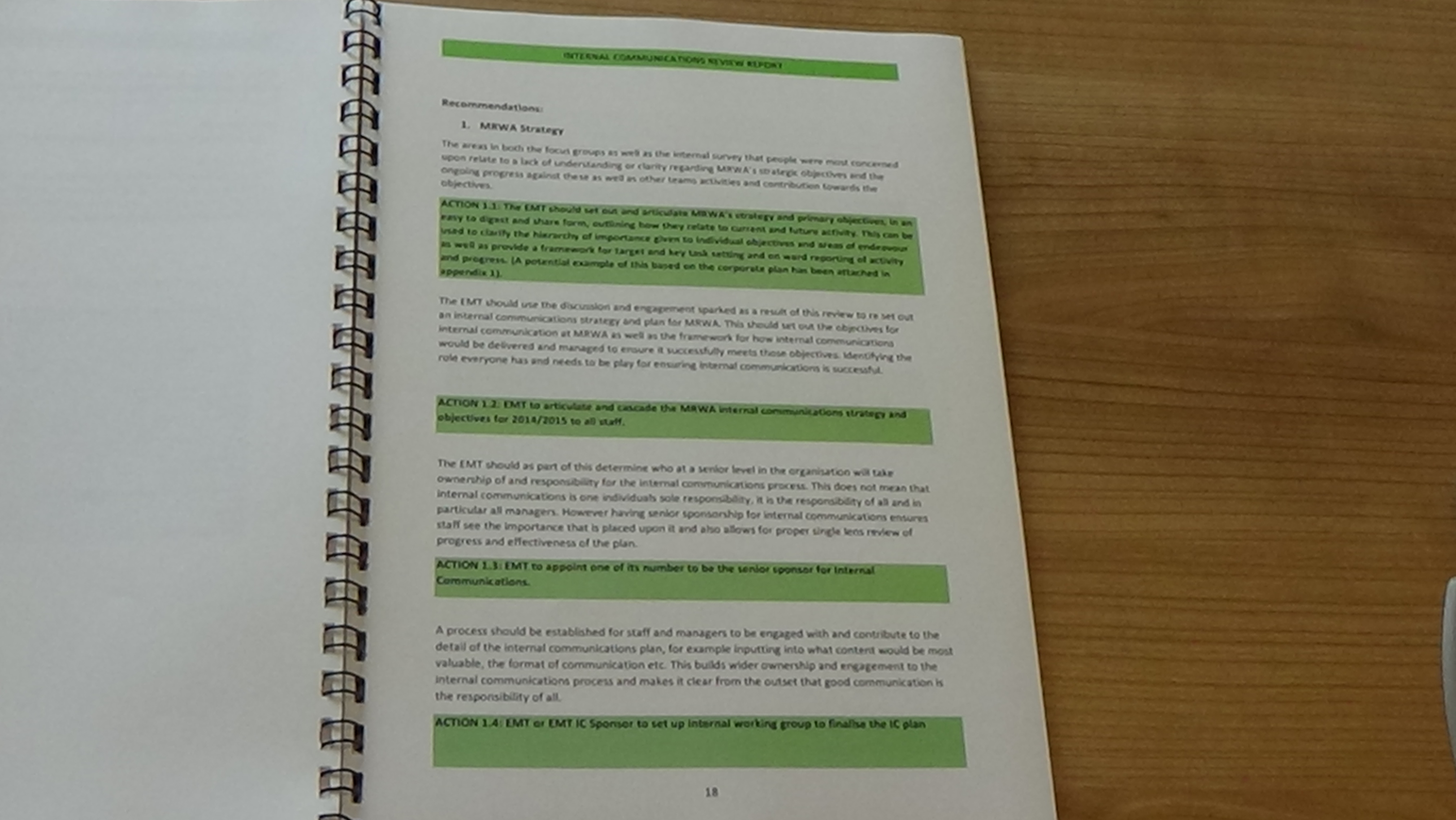
Paver Smith report on internal communications to Merseyside Recycling and Waste Authority page 19
This page starts the recommendations, the first four are for the Executive Management Team (abbreviated to EMT).
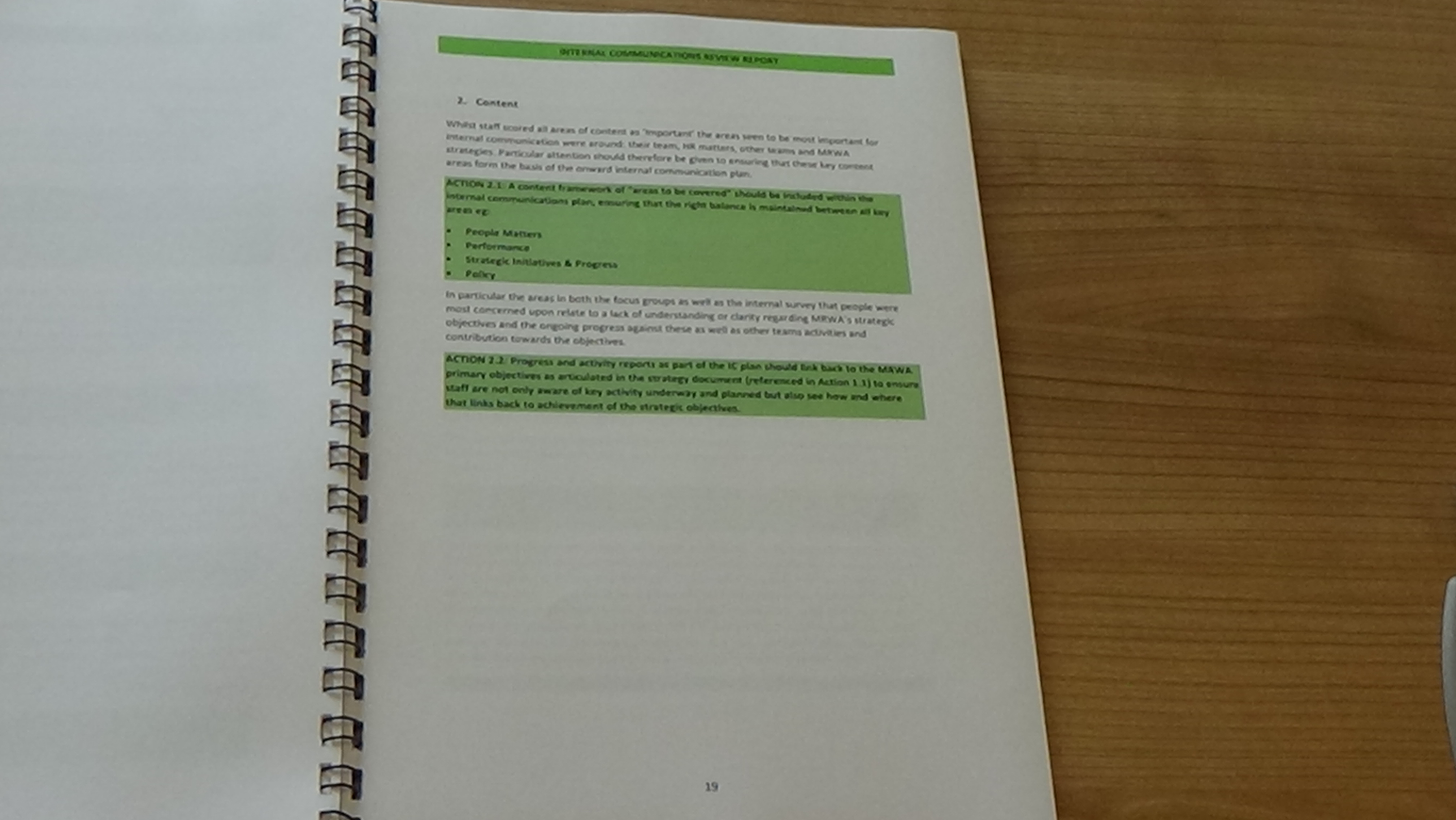
Paver Smith report on internal communications to Merseyside Recycling and Waste Authority page 20
This page has two more general recommendations on content of internal communications.
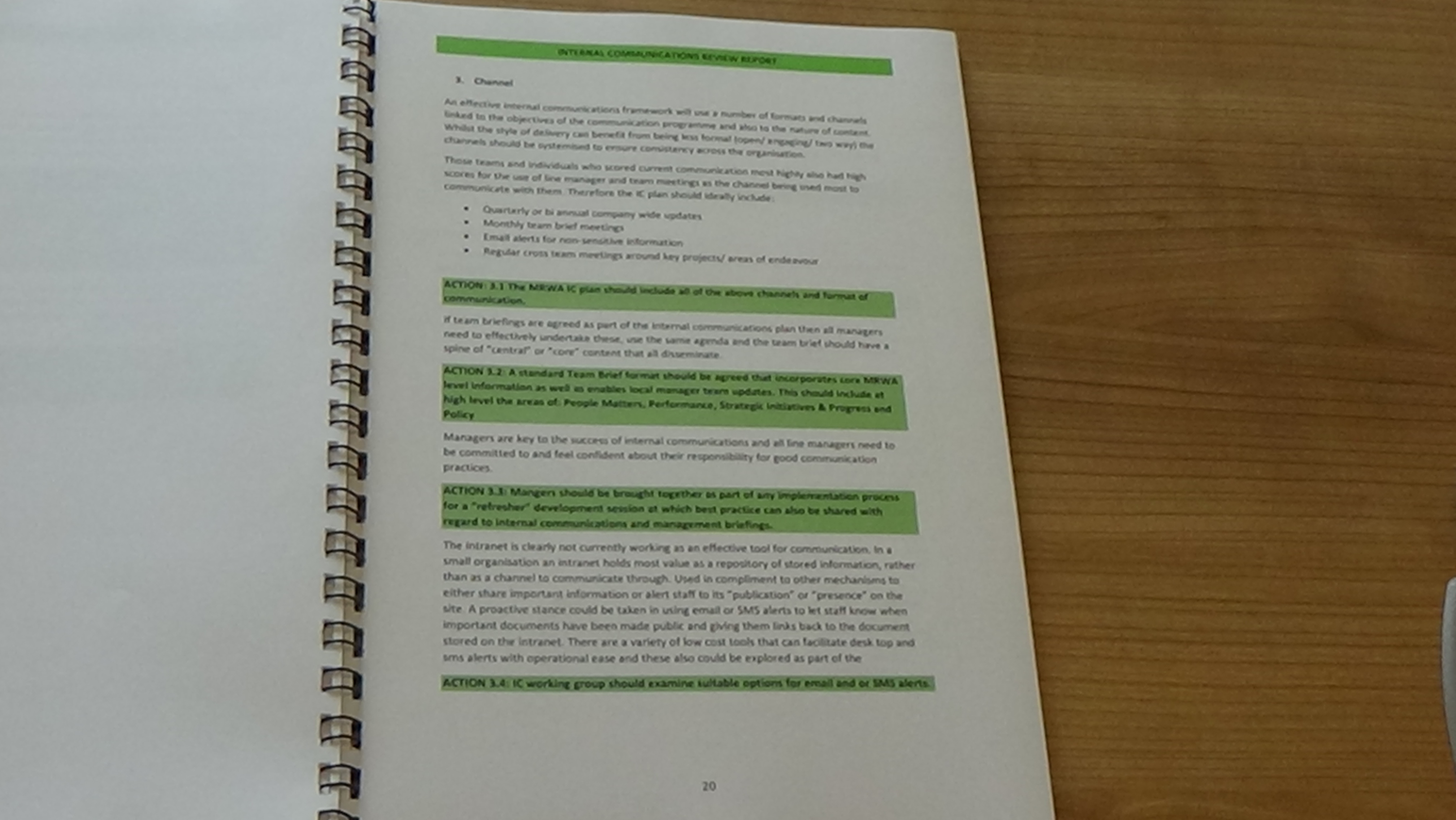
Paver Smith report on internal communications to Merseyside Recycling and Waste Authority page 21
This page has recommendations on the channel used for communication.
Paver Smith report on internal communications to Merseyside Recycling and Waste Authority page 22
This page suggests that positive external PR news should be circulated internally to staff.
Paver Smith report on internal communications to Merseyside Recycling and Waste Authority page 23
Finally, in the concluding remarks and next steps it recommends that the reports findings and recommendations are presented to the Executive Management Team and to the wider management and staff cohort.
If you click on any of the buttons below, you’ll be doing me a favour by sharing this article with other people.